
 English
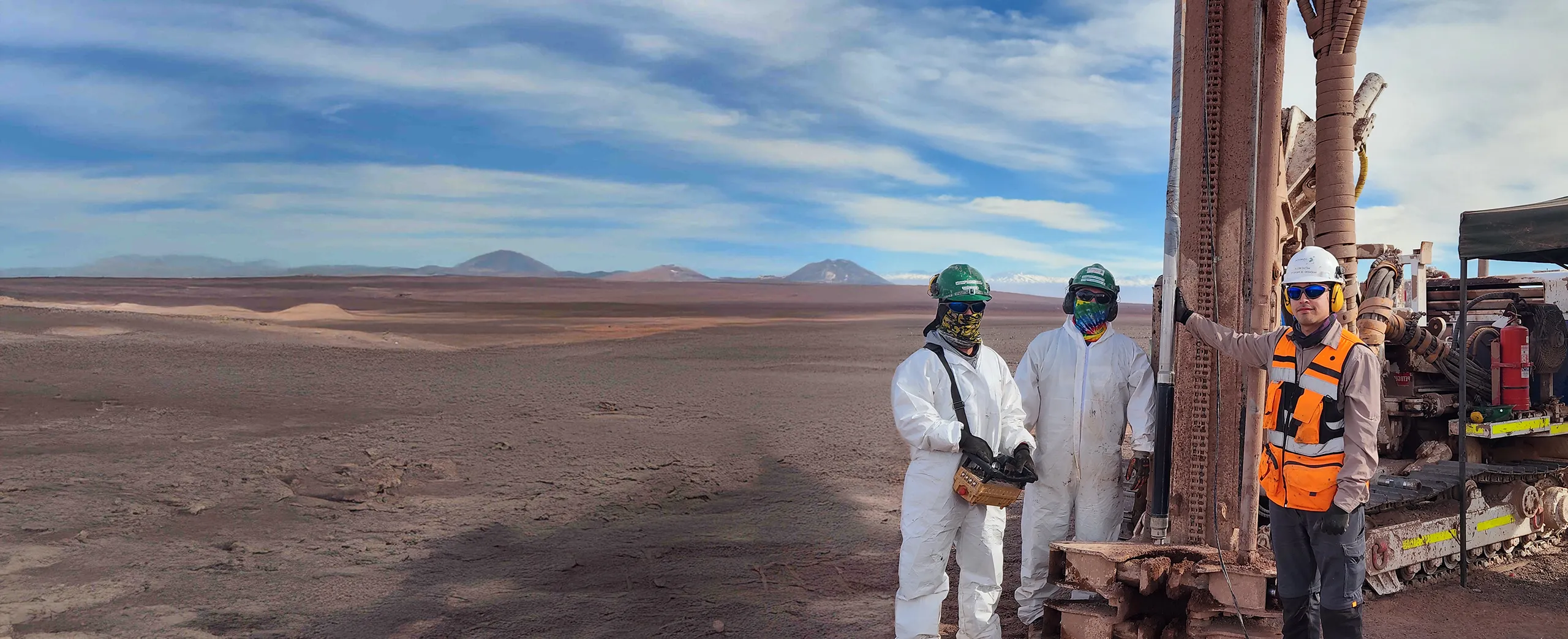
WE ARE PANGEA GEOTECNIA
The ground speaks,
We know how to interpret it.
High-resolution pressuremeter testing combined with Artificial Intelligence:
A new approach to geotechnical characterization for the Chilean mining industry.

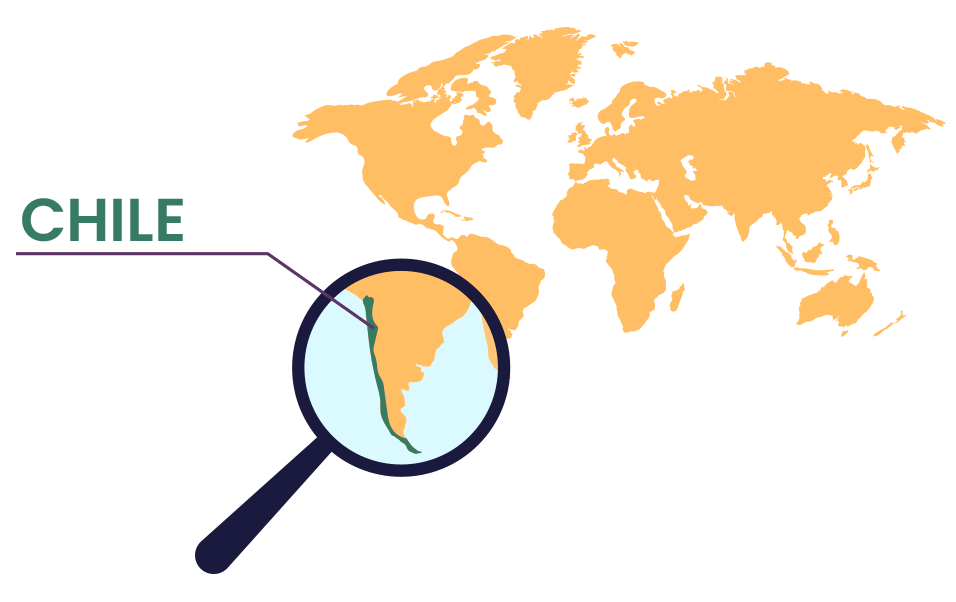
Chile's Geotechnical Challenge
Chile's geotechnical conditions are among the most demanding in the world. High seismicity, predominantly granular and heterogeneous soils, and severe water scarcity in the northern regions present challenges that conventional site investigation methods cannot always address effectively. These conditions require geotechnical solutions specifically designed for the Chilean mining environment, providing reliable data to support engineering decisions with greater confidence.
Limitations of Conventional Site Investigation Methods
Why aren't SPT and CPT enough for Chile's geotechnical conditions?

Primarily based on empirical correlations
Focused on strength rather than deformation behavior
Limited performance in dense, coarse-grained and hard geomaterials
Results may not accurately represent Chile's complex ground conditions
Reliable engineering requires site-specific data—not generalized estimates.
A new approach to geotechnical characterization for Chilean mining
Our Methodology:
Pressuremeter + Finite Element Analysis + AI
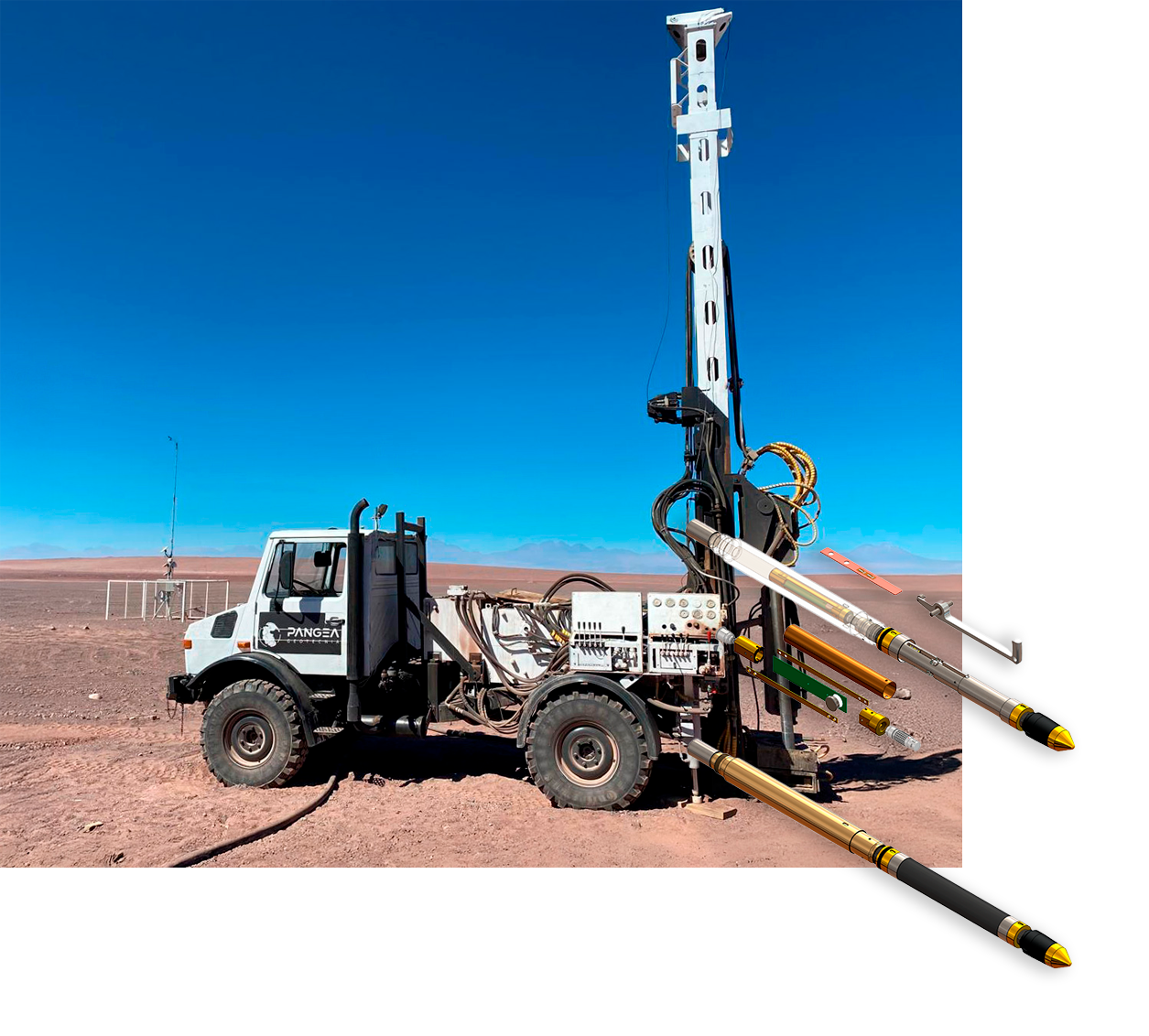
Pressuremeter testing mobilizes a significantly larger volume of soil than conventional in situ tests, providing direct stress–strain curves that accurately represent ground behavior. At Pangea Geotechnia, we combine high-resolution pressuremeter testing, finite element analysis, and Artificial Intelligence to deliver geotechnical interpretations with an unprecedented level of accuracy and confidence.

Reduced reliance on empirical correlations
Results in as little as 2 hours (vs. 3 weeks traditionally)
Predictions within less than 1 mm of field measurements
Applicable to mining, infrastructure, and construction projects
Technical expertise with real-world impact
Backed by more than 10 years of field experience, we have developed a proprietary pressuremeter interpretation methodology that is currently patent pending.
Validated through technical studies and international conferences, our methodology has proven to be a reliable solution for addressing Chile's most demanding geotechnical challenges.
Greater Safety
In the design and construction
of critical infrastructure.
Reducción de costos
Gracias a diseños más
Through more optimized and reliable designs.
Accurate Results
Compared with
conventional methods.
Validated in real projects
CASE STUDY 1
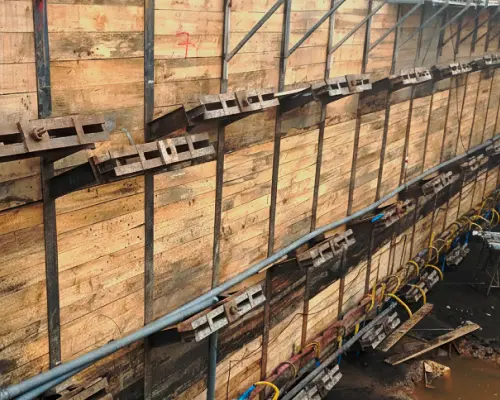
9 meter deep retaining wall
Summary:
During the construction of a 9-meter-deep soldier pile wall in Concepción, Pangea applied its proprietary methodology integrating pressuremeter testing, artificial intelligence, and numerical modeling to predict ground behavior during excavation. Predictions were validated against inclinometer measurements taken on site, achieving a difference of less than 1 mm compared with the observed deformations.

CASE STUDY 2
Monitoring two buildings during construction
Summary:
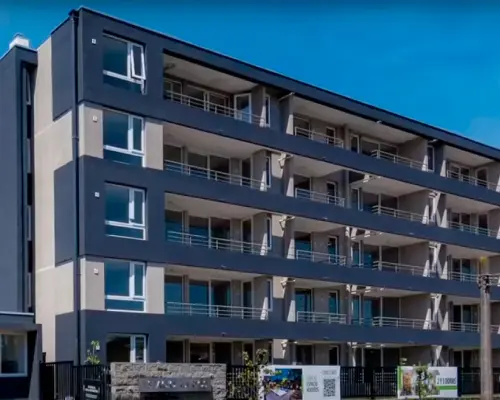
During the construction of two buildings in the Biobío Region, Pangea carried out a geotechnical characterization using pressuremeter testing and three-dimensional numerical modeling to predict ground settlements throughout construction.
The predictions were validated against topographic measurements collected on site, achieving differences of less than 1 mm between predicted and observed behavior.
CASE STUDY 3
Prediction of pile bearing capacity for mining applications
Summary:
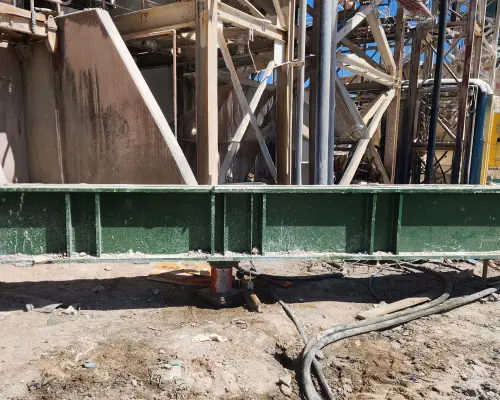
Pangea conducted a geotechnical investigation using pressuremeter testing to estimate the bearing capacity of micropiles installed in a highly complex saline rock mass.
The resulting parameters enabled the redesign of shaft resistance values previously used in engineering design and were later validated through full-scale load tests, demonstrating a significantly higher capacity than traditionally assumed.
CASE STUDY 4
Geotechnical investigation campaign for mine expansion
Summary:
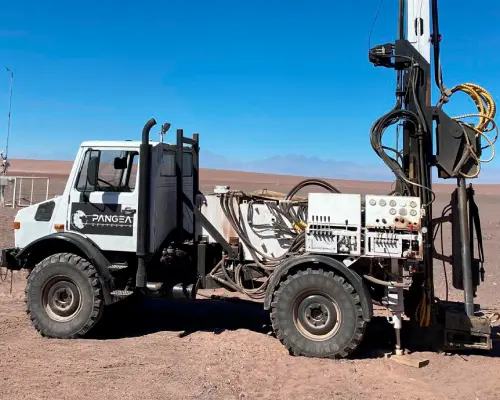
As part of an exploration campaign supporting the future expansion of a mining operation in the Atacama Desert, Pangea carried out a comprehensive geotechnical investigation combining test pits, boreholes, geophysical surveys, laboratory testing, and pressuremeter testing.
The data obtained made it possible to characterize materials where conventional investigation methods presented limitations, providing a continuous geotechnical profile to support future engineering and design stages.
CASE STUDY 5
Pit design optimization using high-resolution pressuremeters
Summary:
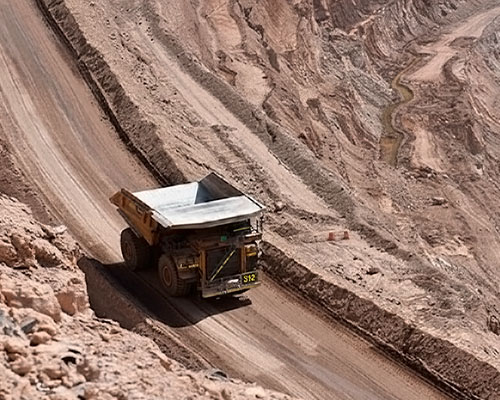
Pangea performed a geotechnical characterization using high-resolution pressuremeter testing to optimize pit slope design in an open-pit mining operation.
The investigation enabled the refinement of rock mass parameters, optimization of slope geometry, and a significant reduction in the estimated volume of waste material to be removed while maintaining the required safety factors.
CASE STUDY 6
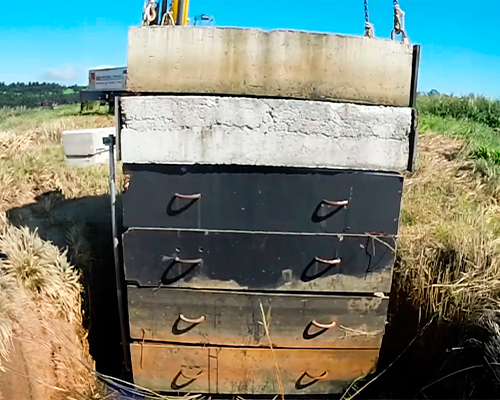
International benchmark for geotechnical prediction in oft clays
Summary:
Pangea applied its geotechnical interpretation methodology to an international benchmark involving an instrumented shallow foundation constructed on soft clay in Ballina, Australia.
Using only the information available to all participants, the methodology produced bearing-capacity and settlement predictions significantly closer to the observed field performance, reducing the variability recorded during the international benchmark.
CASE STUDY 7
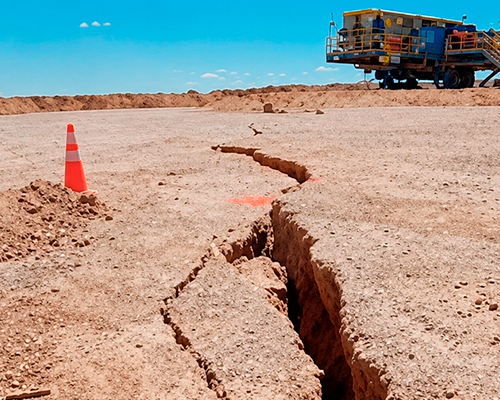
Advanced characterization of a heap leach deposit using a high-resolution pressuremeter
Summary:
Following a slope failure within a heap leach deposit at a mining operation in the Antofagasta Region, Pangea carried out a specialized geotechnical investigation using high-resolution pressuremeter testing to characterize the material and understand the failure mechanism.
The methodology provided representative geotechnical parameters, reduced uncertainty in the site characterization, and supplied a reliable technical basis for stability assessment and mitigation design.
Discover the impact of our methodology
They have trusted our services


Let's Talk
Take your project to the next level of geotechnical confidence.