


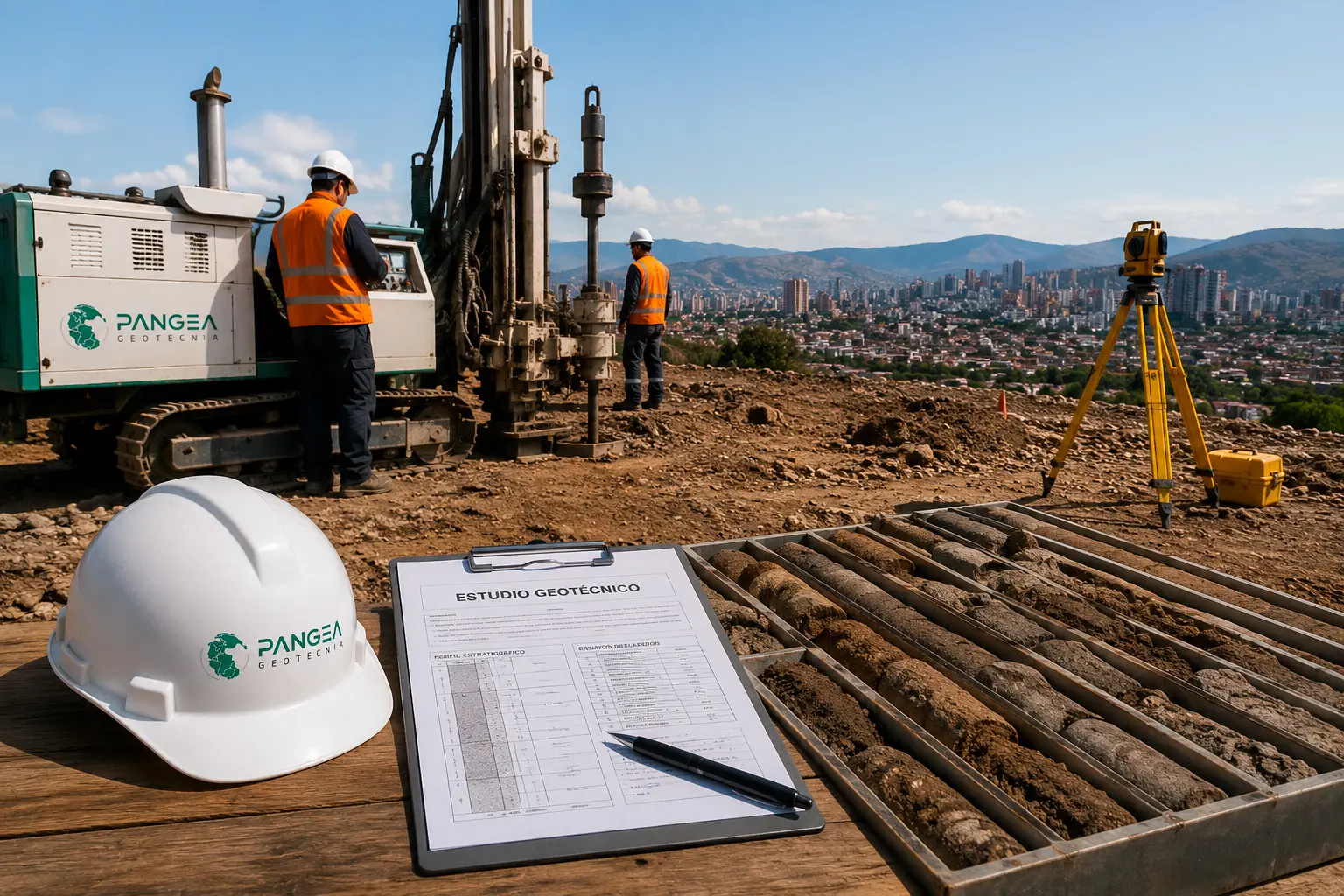
Before constructing a building, transportation infrastructure, or an industrial facility, it is essential to understand the ground conditions. Although two sites may appear similar at the surface, their subsurface conditions can vary significantly and have a major influence on engineering design.
What Is a Geotechnical Site Investigation?
A geotechnical site investigation gathers information about the engineering properties of soil and, where applicable, rock. This is achieved through a combination of field investigations, in situ testing, laboratory testing, and engineering analysis to determine how the ground will respond to the loads imposed by the proposed structure.
Why Is It Important?
Understanding the ground conditions helps reduce uncertainty during both the design and construction phases. It also enables engineers to develop solutions that are appropriate for the site's specific characteristics while anticipating potential geotechnical challenges before construction begins.
Every Project Is Different
There is no universal solution for every site. The most appropriate investigation methods depend on the type of structure, the geological conditions, and the project's technical objectives.
Obtaining reliable geotechnical information from the earliest stages of a project supports informed engineering decisions and provides a solid technical foundation for safe, efficient, and optimized designs.